Table Of Content
Cabinet designs can be done by hand orpreferably using 3D computer aided design (CAD) software such as SolidWorks orSketchUp. It is much easier to see whatyou are working with and make changes in CAD instead of having to recutcabinets. Books could be written oncabinet design, but here are some basic things to think about beforestarting.
Key Specs (Tower Speakers Only)
"Fake" 3way speaker? - Yamaha NS30x Speakers, Soundbars and Subwoofers - StereoNET North America
"Fake" 3way speaker? - Yamaha NS30x Speakers, Soundbars and Subwoofers.
Posted: Tue, 27 Jun 2023 07:00:00 GMT [source]
In the above diagram, the inputfor the second and third crossover could be directly tied to the main input insteadof the high output from another crossover. Linkwitz-Riley designs are hands-down one of the most commonly used for a number of reasons – the main one being its flat response where the woofer and tweeter crossover point outputs overlap. Other designs like Butterworth, Chebychev, and Bessel don’t offer the same frequency response although they do offer various amounts of gain which can be useful for specific design goals.
How We Selected The Best Tower Speakers
Once the desired crossover design is determined, the next step is to design the circuit layout. This involves accurately calculating the resistance of each component, as well as evaluating its performance in relation to other components. In order to ensure a successful result, it’s important to get all of these details right. First, identify the desired audio range that needs to be reproduced by the loudspeakers. Decide which cutoff frequency works best for the speakers based on their abilities, as these will affect the sound produced. For instance, if high-frequency sounds are desired, then a lower crossover frequency should be selected.
way passive crossover design – using XSim
The panels were cut using a table saw and allchamfering and circular cutouts were completed using a quality plungerouter. A circle-cutting jig is aworthwhile investment as it provides accurate results in short order. The bottomof this speaker is removable with weather stripping between the detachablebottom and the rest of the cabinet. Abottom firing port is attached to the bottom plate, which requires 2-3 inch longfeet or spikes for clearance. Althoughit is probably obvious, it is highly recommended to test fit everything beforefinal assembly. When test fitting drivers, it is a good idea to drill holes anduse hurricane nuts to allow secure mounting and remounting of drivers.
We design and build the type of high-quality equipment that we want to listen to. And our customers have nothing but appreciation, which is why they keep coming back. Our expertise ranges from professional car audio to home theater equipment to audio accessories. To take full advantage of powerful speakers, you need a large listening room where you sit many feet away. For smaller rooms and near-field listening (sitting closely), bookshelf or stand-mount speakers are often the better option, especially when paired with a subwoofer.
From here on out, choosing appropriate parts for each stage of this project will become increasingly important in order to achieve optimal results from your build. Note that this calculator is only applicable to passive crossover designs. One solution to this problem is to split up the signal coming from the amplifier according to the signal frequency. Then, for example, low-frequency signals will go to the woofer and high-frequency signals to the tweeter. A combination of the right capacitors and inductors creates filters that only allow the right range of frequencies to go to the correct speaker (or driver).
Even if you don’t know what you are doing, you can try stuff and see what happens. As you can see in our example, we started with a 2nd order topology on all drivers and we finished exactly as we started. But you can add more components to increase the order of the crossover if necessary.
Qln to Debut the Flagship Reference 9 Loudspeaker at Axpona 2024 - Twittering Machines
Qln to Debut the Flagship Reference 9 Loudspeaker at Axpona 2024.
Posted: Mon, 08 Apr 2024 07:00:00 GMT [source]
That said, there are also great lesser-known brands including Q Acoustics and ELAC, which offer excellent sound often at lower prices. Impedance refers to a speaker’s opposition to electrical current flow, measured in ohms. It can help to determine what kind of amplification you’ll need to power your speakers, as you’ll generally want an amplifier that supports your speakers’ impedance rating. In this project, we used 3/4” Balticbirch with a 3/4” MDF baffle and bottom plate. This was selected because the loudspeaker sides were subsequentlycovered with album covers and Lexan for a unique finish.
What Are The Safety Risks Associated With Building A Speaker Crossover Design?
A speaker that outputs high frequencies is called a tweeter, and one that produces low frequencies is called a woofer. Before we do anything, I noticed that the tweeter extends to 1 kHz and we need to address that. This will make sure that the tweeter doesn’t stick its nose into the lower octaves, where it doesn’t belong. Film capacitors are generally bipolar (non-polarized) so they’re great for audio designs, but it’s important to always check the specs to be sure.
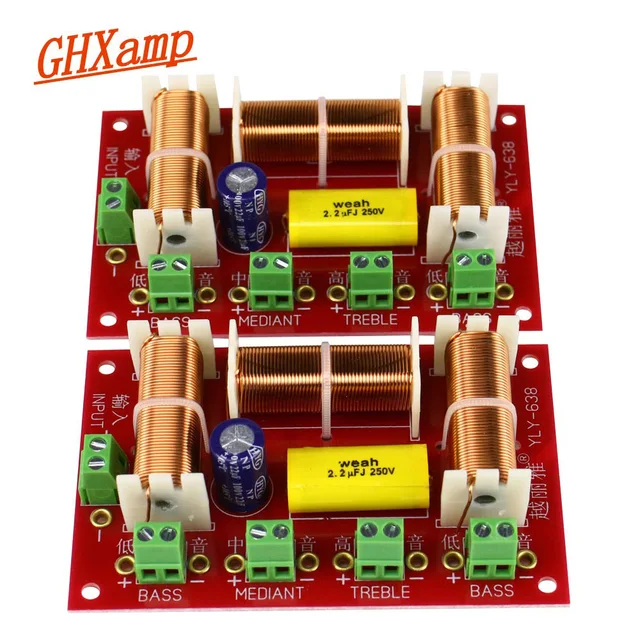
It will provide information on the necessary capacitors and inductors required for either a 2-way or 3-way passive crossover design. A passive crossover is most commonly enclosed within the speaker cabinet, itself. They are made up of electrical components such as capacitors and inductors. These electrical components divide the signal from the amplifier and distribute the frequencies to the correct drivers. Most passive crossover networks are designed to work with a specific speaker driver. This speaker crossover calculator will help you design a set of amazing sounding speakers.
During the designprocess, it is important to pay close attention to system impedance graphs. It is no fun perfecting frequency when yourdesign has a minimum impedance of 1.5 Ohms. SoundEasy has an option to set the minimum acceptable impedance duringoptimization to help reduce the risk of developing a network that dips too lowfor the amplifier you are using. There are a largenumber of possible finishes for a DIY loudspeaker project.
That means low volume and sound distortions at low frequencies, such as the bass instrument in a music track. To fix this issue, you could make the speaker bigger, but then high frequencies would be low in volume. For a hi-fi speaker design, we are looking for the same sound volume output across as wide a range of frequencies as possible. The hump is not near the crossover point and we cannot alter the slopes of the crossover to “cheat” this hump into disappearing where the 2 drivers meet. When making a 3 way passive crossover design, you need to take care of the overall linearity, not just about crossover points.
The midrange for the sample project tracksthe target curve pretty well but is not perfect at the high frequency knee dueto response problems with the driver itself. It is possible to shape the response further but more crossovercomponents equate to a more expensive crossover. It is easy to spend hundreds or eventhousands of dollars on crossover components. It is often better to solve extensive frequency response problems withbetter drivers or a more in-depth diffraction analysis. The purpose of this speaker crossover calculator is to assist you in creating a passive crossover design to improve the sound quality of your speakers.

The best tower speakers start with well-crafted Medium-Density Fiber (MDF) cabinets with reinforced internal bracing to prevent unwanted vibrations. The cabinets should offer firm “feet” or pads to keep them stable and isolated from floor vibrations. The best tower speakers, also known as floor-standing speakers, offer lifelike sound that elevates everything you play, from streaming services and record players to TV shows and movies.
People can hear sound frequencies from 20-20,000Hz.There is no one speaker capable of producing all frequencies throughout this range.Therefore, multiple speakers must be used. Usually, it is damaging for a speaker toproduce frequencies lower than what it was designed for. With the help of these kits and some elbow grease, even a novice audio engineer can create their own speaker crossover design with ease.
Because we didn’t include the nearfield measurement in our FRD files, you will have to imagine that the response continues flat from 250 Hz and down. According to the manufacturer specifications, the midrange has a flat response. Since our speaker cabinet has rough, right angle edges and the speakers are not offset on the baffle, we have a nasty case of edge diffraction. Some people believe that it is best to use a low order crossovers when possible,preferably only 1st order.


No comments:
Post a Comment